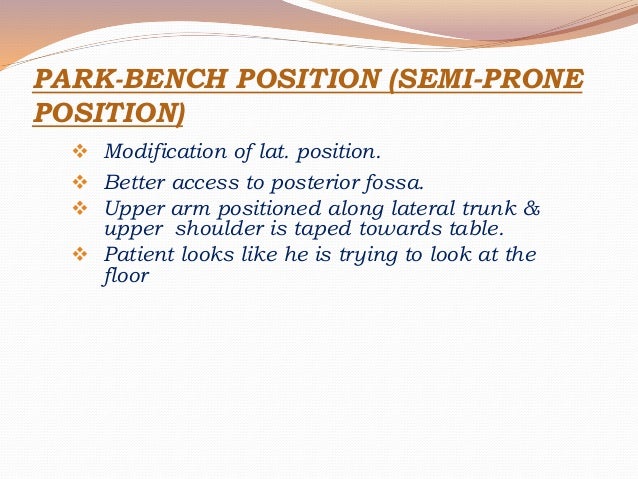
However progressive swelling in the left neck with extending to left face. Better access to posterior fossa.
Lateral Semi Sitting Position A Novel Method Of Patient S Head

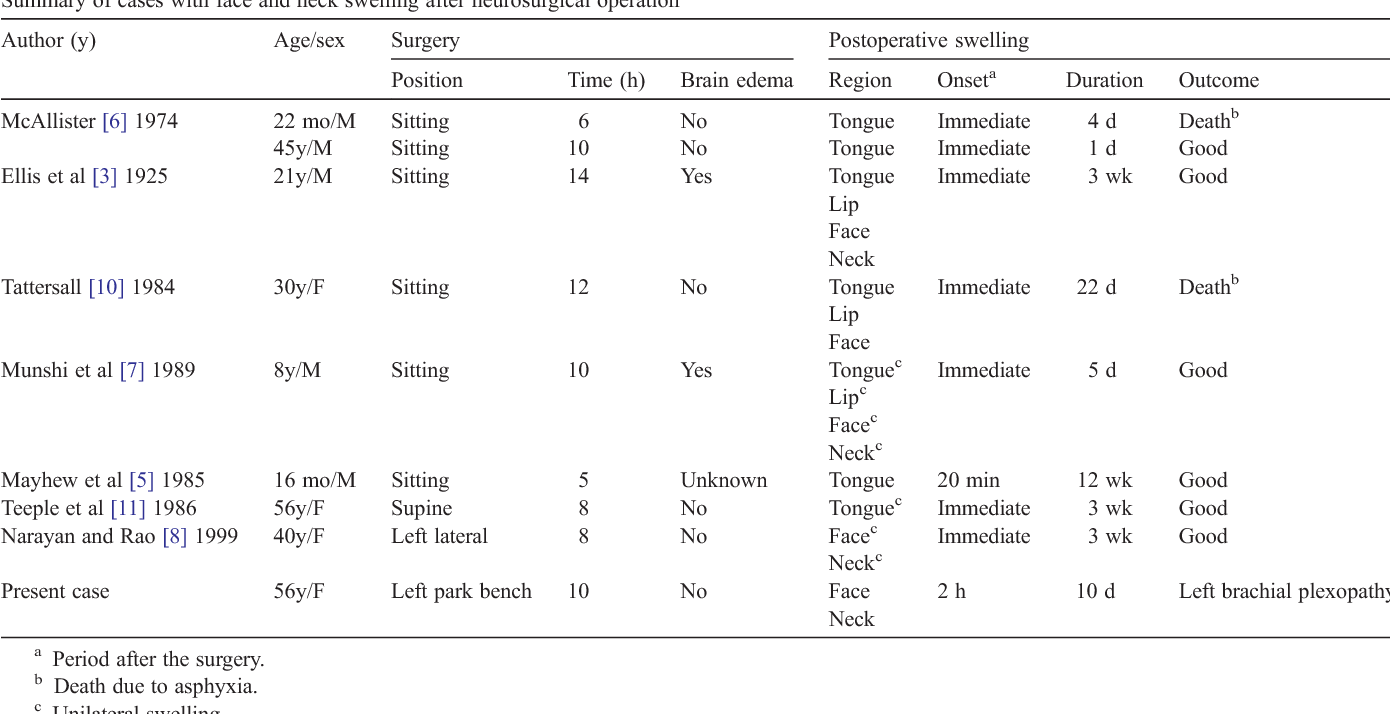
However the delayed airway complication resulting from park bench position has been rarely reported in the literatures.

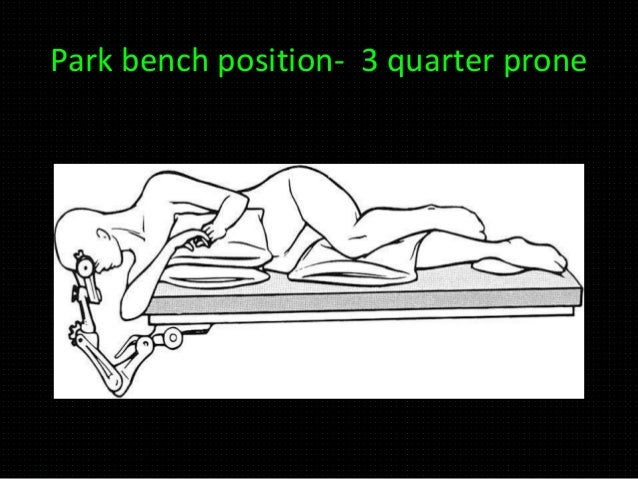
Park bench position anesthesia. Park bench position is a commonly used position in patients operated with cerebellopontine tumor microvascular decompression or lesions of cerebellar hemisphere and vertebral artery. Lateral position with her version of park bench position. The park bench position is a modification of the lateral position where the patient is positioned semi prone with the head flexed and facing the floor.
In awake patient zone 3 west is occupying the dependent 18 cm of lung tissue. Cunningham departments of anaesthesia and neurosurgery royal college of surgeons in irelandbeaumont hospital dublin 9 ireland to whom correspondence should be addressed at. The park bench position is used for patients requiring posterior fossa procedures.
Parkbench positionsemiprone position modification of lat. The prone position is the oldest and most commonly used in posterior fossa surgery. The patient is laid face down and has his head flexed on a special head holder legs slightly bent to prevent slippage from the operating table.
Upper arm positioned along lateral trunk upper shoulder is taped towards table. The supine position is by far the most commonly used position for surgical and diagnostic procedures requiring anesthesia. A 43 year old male who had undergone a resection of a mass in the petrous.
Even the supine position is associated with position injuries. This paper presents a case of massive tongue swelling as a complication after an operation in the park bench position. This facilitates greater access to midline structures and in selected patients avoids the need for the prone position.
Benefits of this position are. A critical appraisal j. Better access to posterior fossa.
Rior fossa craniotomy with park bench position for acoustic neuroma. The anesthesia and operation were performed smoothly. Department of anaesthesia beaumont hospital dublin 9.
Several complications associated with this positioning have been described. Review article the sitting position in neurosurgery. However delayed airway obstruction related to the park bench position has been rarely reported in.
In awake patient zone 3 west is occupying the dependent 18 cm of lung tissue. A 43 year old woman who has a right acoustic neuroma was placed in the park bench position for a posterior fossa craniotomy. Park bench or three quarter prone position viewed from the front of the patient.
Manipulation of the head and neck during positioning can have serious consequences such as quadriplegia cerebral infarction or brachial plexus injury. Upper arm positioned along lateral trunk upper shoulder is taped towards table. Semiprone position modification of lat.
Positioning In Anaesthesia Mgmc

Positioning In Neurosurgery Anesthesia Key

Pdf Neurosurgical Position Causes Peripheral Nerve Injuries
Https Gmch Gov In E Study E 20lectures Anaesthesia Patient 20position Pdf
Maqotesus Lagerungsfibel Gsw Br 10001108 En 2 Pages 51 100
Craniotomy Periprocedural Care Patient Education And Consent Pre

Risks And Benefits Of Patient Positioning During Neurosurgical
Brachial Plexopathy Due To Massive Swelling Of The Neck Associated
Patient Positioning And Anaesthetic Consideration

No comments:
Post a Comment